Padel Court Etiquette: Unwritten Rules Every Player Should Know
Learn the unwritten rules of padel etiquette: arriving on time, returning balls, honest calls, and Curaçao's social court culture after the game.
Padel has an official rulebook, and we cover it in our padel rules explained guide. But anyone who has played more than a handful of games knows there is a second set of rules that never gets written down. These are the small courtesies that decide whether people enjoy playing with you, whether you get invited back to the group chat, and whether the club next door quietly dreads your booking.
In Curaçao the court culture is relaxed. Nobody expects country-club formality, and a bit of island time is baked into daily life. But the padel scene here is also small and tightly connected. With six clubs and 26 courts on the whole island, word travels fast, and the players you meet tonight are the same ones you will see next week. Good etiquette matters more here, not less. Here is what to know.
Before you play: booking and showing up
The most common etiquette failure in padel has nothing to do with the game itself. It happens before anyone hits a ball.
Your slot starts at the booked time, not when you arrive. Court bookings run back to back, especially in the evening when demand peaks. If you book 7:00 to 8:30 PM and stroll in at 7:15, you have not lost fifteen minutes of your time, you have lost fifteen minutes of everyone’s time. Aim to be at the club ten minutes early, shoes on, ready to walk onto the court the moment it opens up.
Warm up efficiently. With daytime temperatures of 30 to 33 degrees Celsius (86 to 91 Fahrenheit), your body is already warm in the literal sense, but you still want a few minutes of easy rallying before playing points. Do it inside your slot, not by creeping onto the court while the previous group is finishing.
Cancel early if you cannot make it. Evening courts on the island are genuinely scarce, and prime slots book out days ahead. If your foursome falls apart, cancel through the club’s booking app as soon as you know, so someone else can grab the court. Cancelling two hours before is far better than not showing up, and not showing up repeatedly is the fastest way to get a reputation.
Sort payment before or right after, not mid-argument. Whoever booked usually pays and splits it afterward. Settle it the same evening. Chasing people for their share of a court fee a week later sours a group quickly.
During the game
Balls from other courts
This is the etiquette situation you will face most often, because most clubs in Curaçao have courts side by side.
When a ball from a neighboring court rolls onto yours, do not fire it back mid-point. Wait until the point on your court finishes, pick it up, make eye contact with someone on the other court, and return it with a gentle underhand feed, ideally to the server. A quick “ball!” as a heads-up is standard.
When your ball escapes onto another court, the same applies in reverse. Call “ball on court” loudly enough that they can stop the point safely, then wait. Never run onto someone else’s court to fetch your ball while they are playing. It is dangerous and it is the single most annoying thing you can do at a busy club.
Call lets honestly
If a stray ball enters your court mid-point, anyone can call a let and the point is replayed. The unwritten rule: call it immediately or not at all. Calling a let after you have lost the point, because a ball rolled somewhere near the fence twenty seconds ago, is poor form. Equally, if the let is genuine, take it without drama, even if you were about to win the point.
Line calls: your side, your call
Padel follows the same convention as tennis. Each pair calls the lines on their own side, and the benefit of the doubt goes to the opponent. If you are not sure the ball was out, it was in. In friendly games, a disputed point is simply replayed. Nobody remembers who won a Tuesday night social match, but everybody remembers the player who argued every call.
Crossing behind courts
At clubs where you walk past other courts to reach yours, wait for the point in progress to end before crossing behind the glass. It takes ten seconds and marks you instantly as someone who knows what they are doing.
Noise, music, and celebration
Celebrate your winners, absolutely. Padel is a loud, social game and nobody expects library silence. But keep a sense of proportion: screaming on every point, coaching your partner at full volume, or bringing a speaker courtside without asking your neighbors all wear thin quickly. If in doubt, match the energy of the courts around you.
Rotating in social play
Curaçao’s clubs run plenty of open sessions and mixers, and the padel community here is famously welcoming to newcomers and visitors. That welcome comes with its own etiquette.
Rotate when it is time to rotate. In americano-style sessions and open play, the format decides who plays with whom and for how long. Do not linger on court after your rotation, and do not engineer the matchups so you always land with the strongest players. The organizer sets the format; your job is to flow with it.
Adjust to the level on court. In mixed-level social play, blasting your hardest smash at the weakest player on the other side wins you the point and loses you the room. Use those games to work on placement, lobs, and patience instead. Your results will improve too, since control wins far more padel points than power, something we dig into in our basic padel strategy guide.
Introduce yourself. A quick name exchange and a handshake before the first point is standard in social play here. If you are visiting the island, say so. You will likely leave with a WhatsApp invite to the next session.
Respect the next booking
How you leave the court matters as much as how you arrive.
- Finish on time. When your slot ends, the game ends, even mid-tiebreak. If the next group is standing at the gate, wrap up the point you are playing and walk off.
- Collect the balls. Do a quick sweep for balls in the corners and behind the glass before you leave.
- Take your trash. Empty bottles, grip wrappers, towels. Leave nothing behind.
- Clear the bench. Bags and gear off the court area so the next four can set up immediately.
After the game: the Curaçao part
The universal padel ritual is the racket tap at the net, all four players, win or lose, and a genuine thanks to your partner and opponents. Skip it and you will feel the chill.
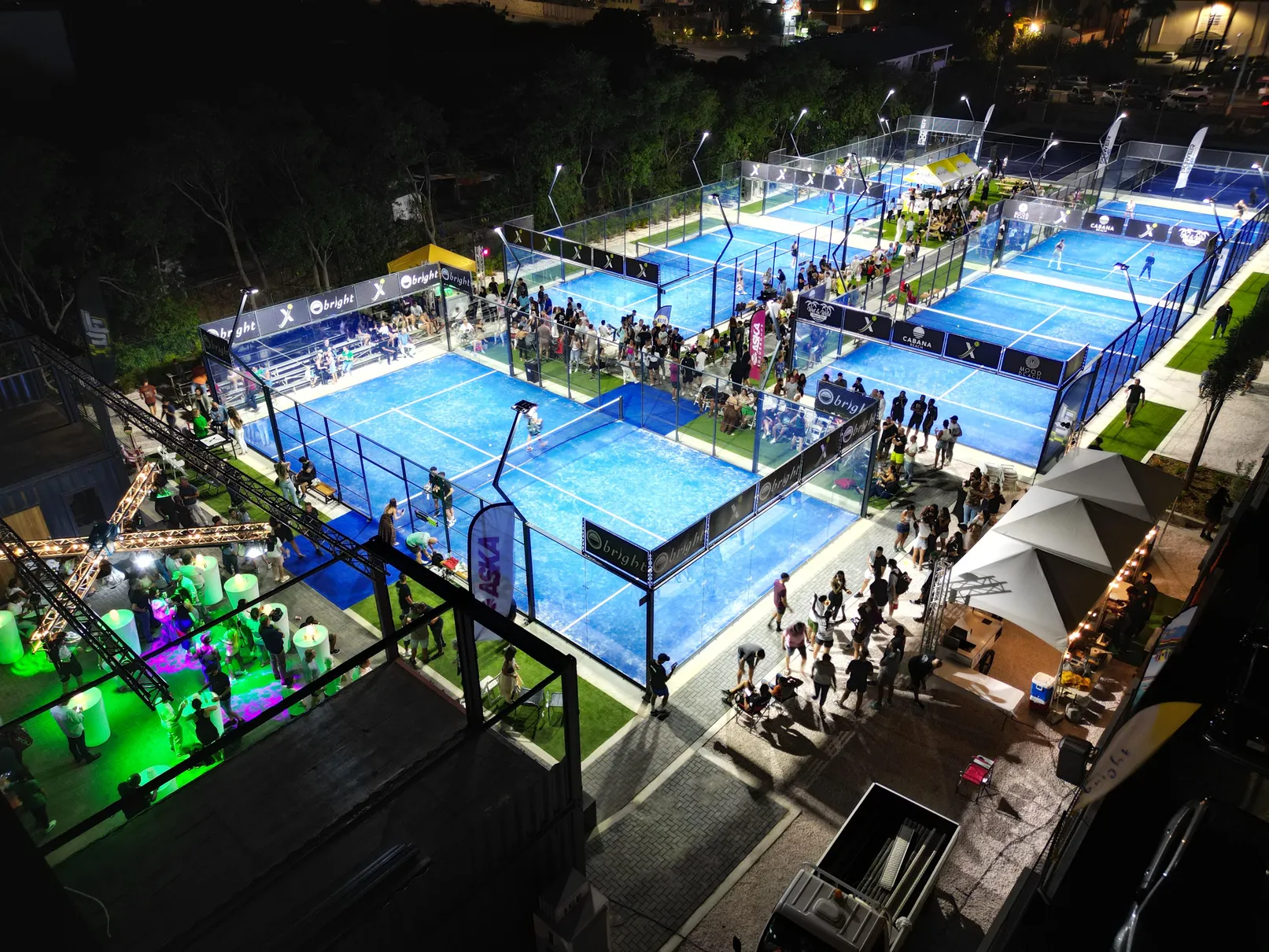
On this island there is one more unwritten rule: the game does not really end at the net. Sticking around afterward is half the point of playing here. At Padel X Curaçao, the island’s largest club near Mambo Beach, evening games routinely flow into the rooftop bar. At Ultimate Padel on Santa Rosaweg, the bar service keeps groups courtside long after the last point. You are never obligated to stay, but if your opponents invite you for a drink, accepting at least once is how casual games turn into a standing weekly booking.
The quick checklist
- Arrive ten minutes early, leave exactly on time
- Cancel unwanted bookings as early as possible
- Wait for the point to end before returning balls or crossing behind courts
- Call lets immediately and lines honestly, doubt favors the opponent
- Rotate willingly in social play and adapt to the level on court
- Clear balls, trash, and gear before the next group walks on
- Tap rackets at the net, and say yes to the after-game drink
None of this is complicated, and none of it requires being a strong player. Etiquette is simply the thing that makes a small padel scene like Curaçao’s feel generous instead of territorial. Master these habits and every club on the island becomes an easy place to show up alone and leave with a group. For everything else about playing here, from courts to costs to booking, start with our complete guide to padel in Curaçao.