Singles vs Doubles Padel: Which Courts to Book in Curacao
Padel is built for doubles, but singles has its place too. How the games differ, why singles courts are rare, and where to book both in Curaçao.
Ask anyone who plays regularly in Curaçao and they will tell you the same thing: padel is a doubles sport. Four players, one enclosed court, and rallies that reward teamwork over raw power. That is the game as it was designed, and it is what you will find on almost every court on the island.
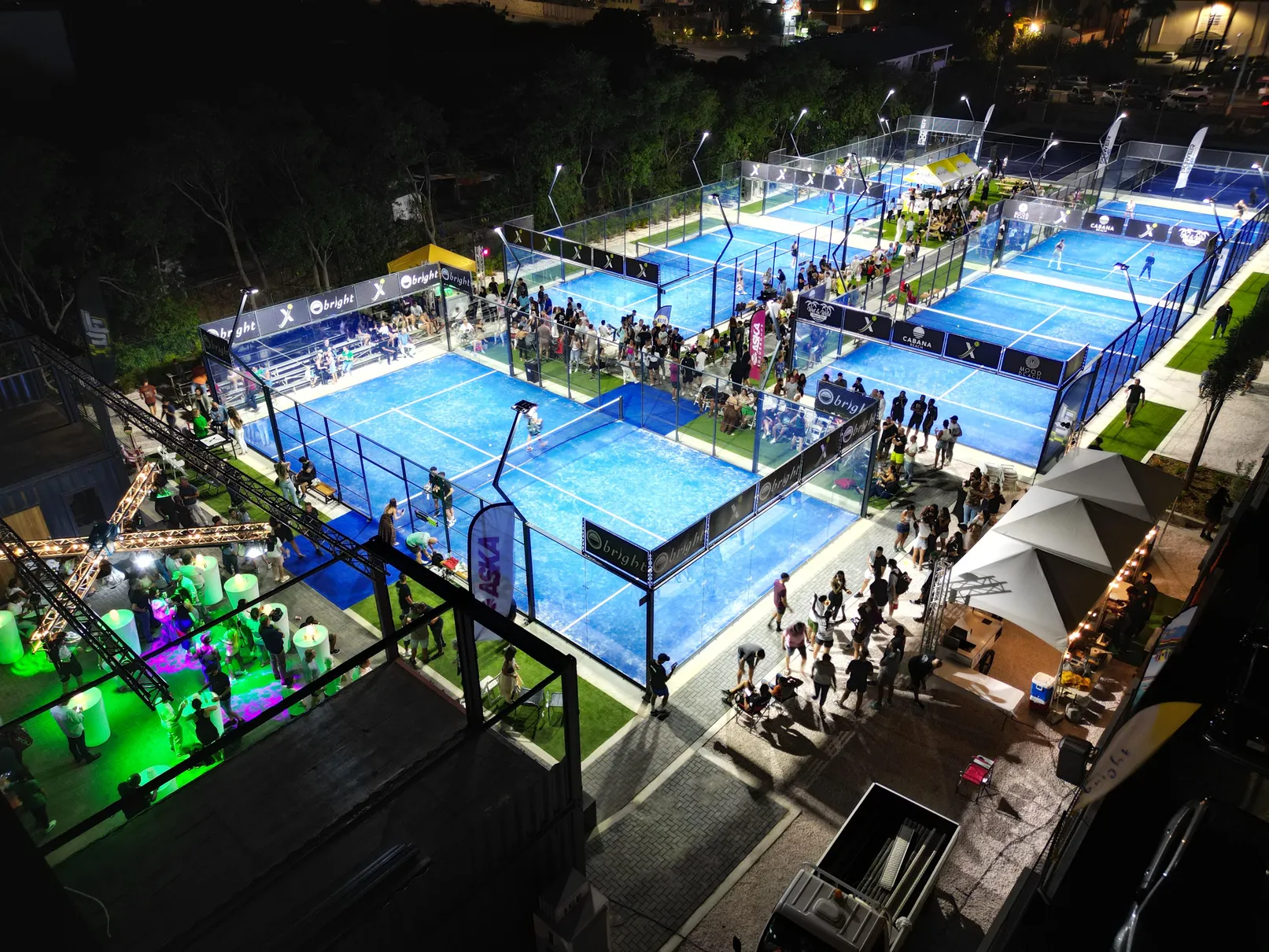
Almost every court. Of the 26 courts spread across Curaçao’s six clubs, exactly one is a dedicated singles court, and it sits at Padel X Curaçao near Mambo Beach. If you have ever wondered whether you can play padel one on one here, the answer is yes, but it helps to understand how different the two games really are before you book.
This guide covers the court differences, the tactical and physical contrast between singles and doubles, and which format makes sense depending on who you are traveling or playing with.
Padel is a doubles game by design
A standard padel court measures 20 by 10 meters (66 by 33 feet), enclosed by glass back walls and mesh fencing. That is roughly a third of the size of a tennis court, shared between four players. The tight space is the whole point: with two people covering each side, nobody has to sprint corner to corner, and points are won through placement, patience, and clever use of the walls rather than outright pace.
The scoring works exactly like tennis (15, 30, 40, game) and is identical in singles and doubles, so there is nothing new to learn on that front. If you want a refresher on how the walls, serves, and lets work, our padel rules explained guide walks through all of it.
Because doubles is the default, everything at Curaçao’s clubs is built around groups of four: court bookings, social mixers, and tournaments all assume you are playing two versus two.
What makes a singles court different
A singles padel court keeps the same 20 meter length but narrows to 6 meters wide (66 by 20 feet). Same glass back walls, same net height, same scoring. The 4 meters of missing width changes the feel completely: there is far less room for sharp cross-court angles, so rallies become more linear, more up and down the court, with the back glass doing even more work.
Why are singles courts so rare, in Curaçao and everywhere else? Simple economics. A doubles court hosts four paying players in roughly the same footprint where a singles court hosts two. When a club has limited land, and every club on this island does, doubles courts win. Curaçao is not unusual here; dedicated singles courts are a rarity worldwide.
That is what makes the singles court at Padel X a genuine curiosity. The island’s largest club has eight courts in total: five covered courts with lights, two outdoor courts, and the lone singles court. It is the only place in Curaçao where you can play one on one on a court actually built for it.
How the games differ on court
If you have only ever played doubles, singles will surprise you.
Doubles is a positional game. The pair that controls the net usually controls the point. You advance together, retreat together under lobs, and communicate constantly about who takes the middle ball. Winners are earned gradually: a deep lob to push opponents back, a volley into the gap, a wall rebound your opponents misjudge. Most of what we cover in basic padel strategy is written for doubles, because that is the game most people play.
Singles is a movement game. You cover all 6 meters of width alone, plus everything off the back glass. There is no partner to poach the middle ball or reset the point while you recover. The serve and the first shot after it matter far more, because short rallies favor whoever moves best. Tactically it sits somewhere between tennis and squash: fewer angles than doubles, more sprinting, and nowhere to hide a weak backhand or slow footwork.
Players coming from competitive tennis often take to singles padel quickly, since the one-on-one rhythm feels familiar. Players who learned padel as a social doubles game usually find their first singles session humbling. Both reactions are normal.
The heat changes the math
Here is the part that matters more in Curaçao than almost anywhere else: the climate.
Daytime temperatures on the island run 30 to 33 degrees Celsius (86 to 91 Fahrenheit) year-round. In doubles, that is manageable, especially on covered courts, because you share the running with a partner and rallies give you breathers. In singles, you are doing roughly double the movement with no one to cover for you. A midday singles match on an open court in Curaçao is a genuinely punishing workout, even for fit players.
The practical advice is simple: book singles for the edges of the day. Early morning slots are cooler and quieter, and after sunset (around 6:30 PM year-round) temperatures drop to 26 to 28 degrees Celsius (79 to 82 Fahrenheit) and the trade winds pick up. Evening play is popular for doubles too, so if you are targeting a specific slot, check the club’s booking app a day or two ahead. Our night padel guide covers which clubs have the best lighting.
Where to book singles in Curaçao
For a proper singles court, there is one address: Padel X Curaçao on Dr. Martin Luther King Blvd in the Mambo Beach area. Regular courts there start at ANG 60 per hour (about $34 USD); check the club’s booking app or call +5999 675 0750 for singles court availability and rates. The rooftop bar is a nice bonus for the post-match debrief.
Nothing stops you from playing one on one on a regular doubles court at any other club, and some pairs do exactly that when they just want to hit together. Fair warning: covering a full 10 meter width alone is a serious cardio session, so treat it as a workout rather than a fair match. Any of the island’s other clubs work for this: Ultimate Padel on Santa Rosaweg, Epic Padel with its four floodlit outdoor courts on Chuchubiweg, Just Padel in central Willemstad, Padel Curaçao in Scherpenheuvel with the island’s only indoor court, or the intimate two-court Van Engelen Padel.
For a full comparison of facilities, covered courts, and locations, see our best padel clubs compared.
So which should you book?
Traveling solo? Book doubles. Curaçao’s padel scene is small and welcoming, and finding a fourth player is rarely a problem. Ask at the front desk, join a social session, or check our guide to walk-in padel in Curaçao for showing up without a group.
Traveling as a pair? You have three options. Book the singles court at Padel X for a proper head-to-head. Book a regular court and rally one on one as a workout. Or, and this is what most visiting pairs end up loving, book a doubles slot and let the club match you with two other players. You will get a better game and probably a drink invitation afterward.
New to padel? Start with doubles, no contest. It is more forgiving physically, your partner covers your mistakes, and it is how the sport is meant to be learned. Our complete guide to padel in Curaçao covers everything a first-timer needs.
Competitive tennis player on vacation? Book the singles court once. The one-on-one format will feel like home, the narrow court will not, and the contrast teaches you more about padel in an hour than a week of casual doubles.
Doubles is the heart of padel in Curaçao, and it should be your default. But the fact that this small island has a dedicated singles court at all says something about how seriously the local scene takes the sport. If you are curious, book it. Just bring water, pick an evening slot, and expect to sleep well afterward.